C:\PROJECTS\BEER_LEAGUE>_
Beer League Baseball — Home Run Derby Playtest
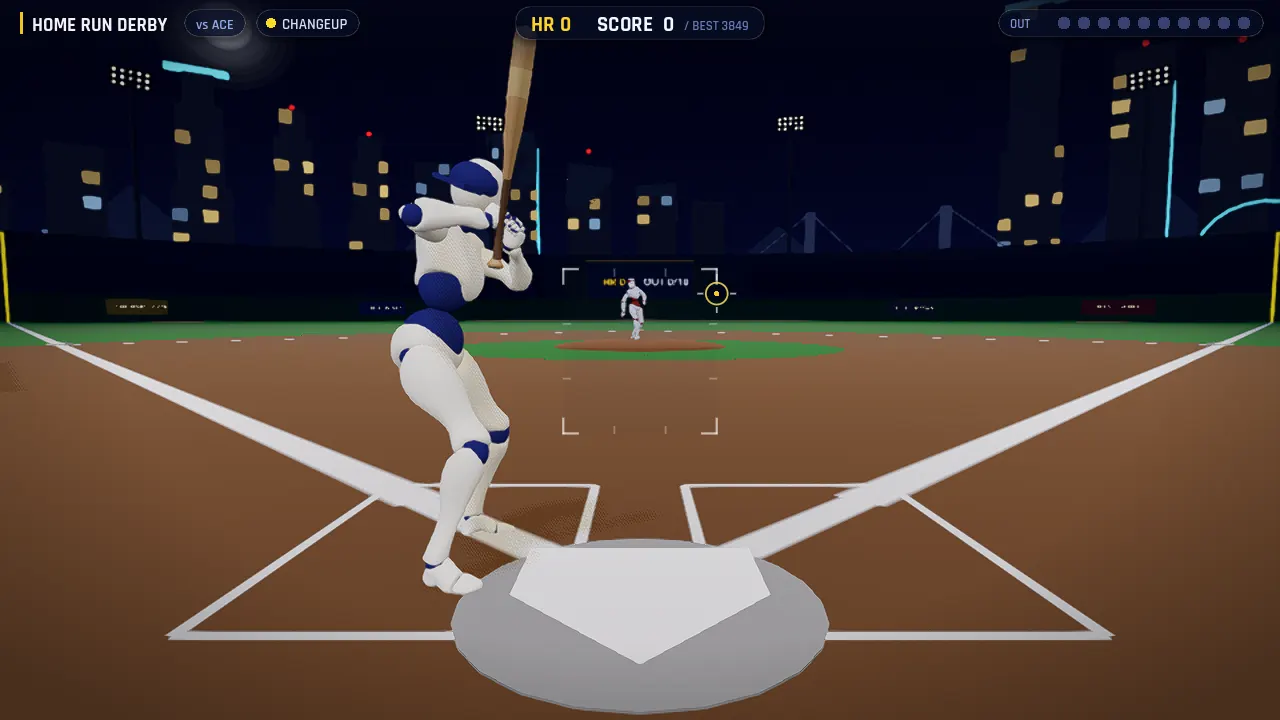
A free arcade home run derby for Windows and Linux. Read the pitch, time the ring, aim under the ball, and try to set the stadium on fire. It's an open playtest — I want your first impressions before the game hardens into its final shape.
v0.9.1 · Windows (51 MB) · Linux (42 MB) · no installer, no account
What it is
Beer League Baseball is a batting arcade game with a beer-league identity: big swings, bigger dingers, zero pretense of simulation. The playtest build is a single mode — a home run derby — because that one loop is the whole game in miniature. If hitting doesn't feel good here, nothing built on top of it will.
You get ten outs. Anything that isn't a home run is an out: a whiff, a fly ball that dies on the warning track, a shot off the wall, a pitch you took that caught the zone. Fouls are free. Every homer is worth its distance, multiplied by your streak of consecutive homers up to ×4 — and at ×4 the stadium takes over with fireworks, a crowd roar, and an ON FIRE banner. Scraping one over the fence by a couple of feet earns a bonus, because that's the best feeling in baseball.
Three pitcher tiers — ROOKIE, VETERAN, ACE — with a best score tracked per tier, and grades from C to S at the end of each session.
How to hit
- 01. Read the tracker. The gold reticle shows where the pitch is heading right now. A fastball tells the truth immediately. A curveball or changeup lies until it breaks.
- 02. Time the ring. A white ring collapses onto the tracker and pops at the perfect moment to click. It always takes the same half-second to close, so the pitch's rhythm lives in when it starts.
- 03. Aim under the ball. Meeting the ball at its lower edge adds loft. Catch it high and you'll top it into a ground out. Get way under it and it's a weak pop-up.
- 04. Click. Contact happens a quarter-second after the click, like a real swing. Early pulls the ball; late goes the other way.
That's the whole input scheme: mouse to aim, one click to swing. The depth is in reading the pitch, not in the controls. ESC pauses, F11 toggles fullscreen.
How it's built
◉ Godot 4, from scratch
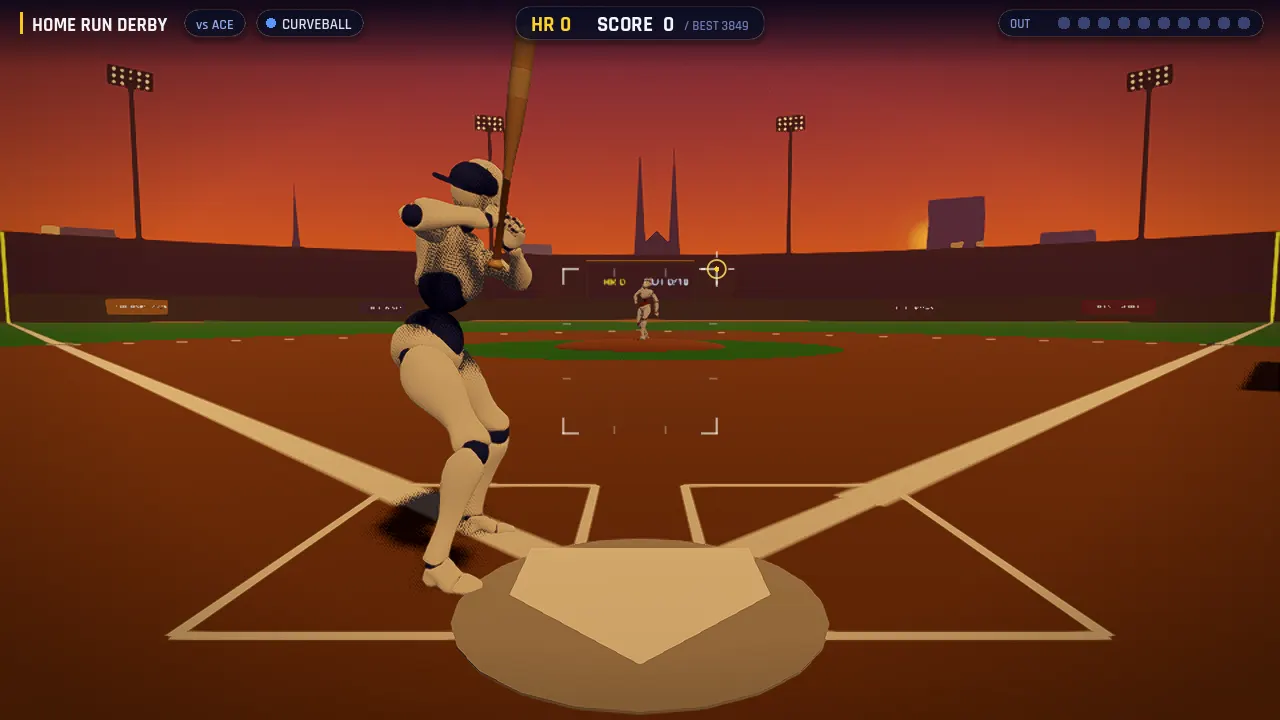
Open-source engine, native Linux and Windows exports. The stadium — field, chalk, stands, light towers, skyline, day/sunset/night skies — is generated procedurally rather than modelled.
◉ Rules in one tested file
Every rule — pitch trajectories, swing judgment, ballistics, scoring, grades — lives in a single pure-logic script with a headless unit test suite. Presentation is kept separate, so "feel" tweaks can't quietly change the game.
◉ Tuned from real play, not guesses
The game writes a local log of every pitch, swing, and result. Over a hundred logged sessions shaped the current balance: the timing ring was rebuilt after the data showed it was training a consistent early swing on changeups, and the grade thresholds are set at real score percentiles.
◉ Near-miss feedback
Most outs in a derby are deep flies, and a silent out feels unfair. Warning-track balls get a "SO CLOSE" banner, wall balls tell you exactly how many feet shy you were, and the camera lingers on the ball with a marker where it died.
◉ Nothing phones home
That gameplay log stays on your machine. No telemetry is sent, no account is required, and the zip has no installer — unpack and run.
What I need from playtesters
Honest first impressions, in whatever form is easiest for you. The questions I'm actually trying to answer:
- Could you read the pitch? Did the breaking balls feel deceptive or just unfair?
- When you made an out, did you know why?
- Did you want to hit "play again" — and if you stopped, what stopped you?
- Anything that looked broken, stuttered, or ran badly on your hardware.
If you're willing, the local gameplay log the game writes is the single most useful thing you can send — it lets me see exactly what happened on every swing instead of guessing. It's optional, and it never leaves your machine unless you choose to share it.
Frequently asked questions
Is Beer League Baseball free?
Yes. The playtest is free on itch.io for Windows and Linux — no installer, no account, no payment. Download the zip, unpack it, play.
How do you play the home run derby?
Aim with the mouse, click to swing as the white ring snaps shut, and aim just under the ball for loft. Ten outs; fouls are free; anything that isn't a homer is an out.
What engine is it built in?
Godot 4. Procedural stadium, motion-captured batter and pitcher, and every game rule in one unit-tested script.
Does the game send any data off my machine?
No. It writes a local gameplay log to its own folder for balance tuning, but nothing is transmitted. Sharing it is optional.
What feedback are you looking for?
Honest first impressions: was the pitch readable, did a miss feel fair, did you want to go again. Bugs and the optional log are a bonus.
Is there a Mac or Steam version?
Not yet. The playtest is Windows and Linux on itch.io. Steam is the goal; macOS depends on interest.
Grab a bat
Ten outs. Three pitchers. One stadium that would very much like to catch fire.
Beer League Baseball is built by Joshua Trees — focused, thoughtful digital services from development to design.